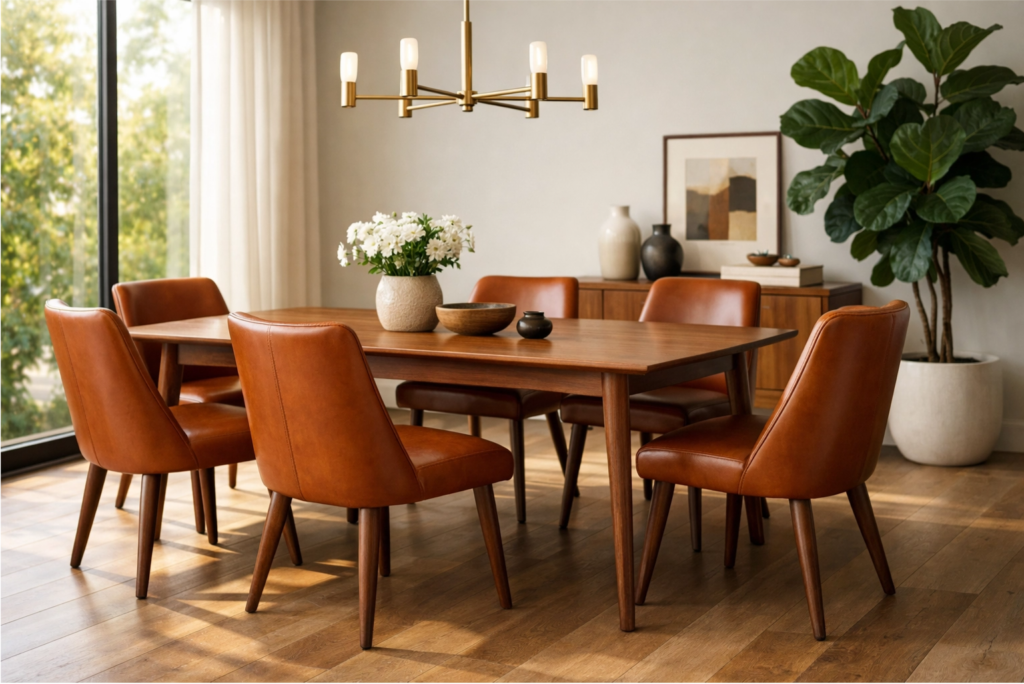
You love the sophisticated, timeless look of a Mid-Century Modern leather dining chair. But you hesitate. Is leather practical for a dining room with spills and daily use? Are you going to be stuck with something that cracks, stains, or wrinkles, making you regret your investment?
Choosing the right type of leather and following a simple care routine is the secret. A quality top-grain leather chair is incredibly durable and easy to clean, developing a beautiful character over time, making it a smart and stylish choice for any dining room.
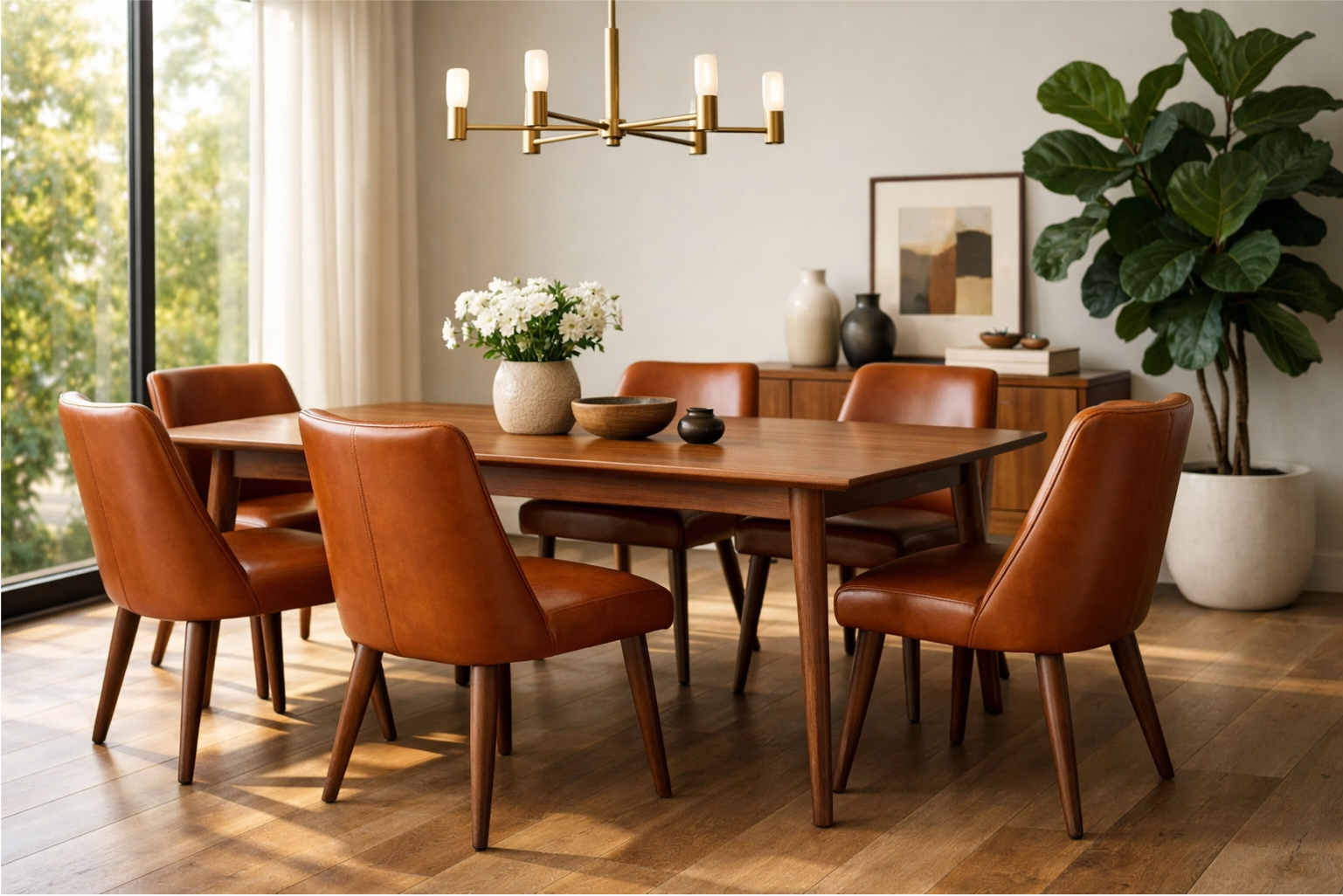
This is a conversation I have all the time. As a furniture factory founder, I work with demanding commercial buyers like Mark Chen from Canada. Mark furnishes upscale restaurants and hotels, and for him, furniture isn’t just about looks—it’s about performance and long-term value. He needs a dining chair that can withstand hundreds of dinners a week, not just a few family meals. His rigorous standards have taught me exactly what makes a leather chair a worthwhile investment versus a costly mistake.
Is Leather Really a Suitable Material for Dining Chairs?
You love the luxurious feel of leather, but you picture a glass of red wine tipping over and disaster striking. You wonder if a fabric or wooden chair would be a safer, more practical choice for your dining space.
Yes, leather is an excellent material for dining chairs, often more suitable than fabric. It is naturally durable, resistant to spills when properly treated, and incredibly easy to clean. It also ages beautifully, gaining character over time.
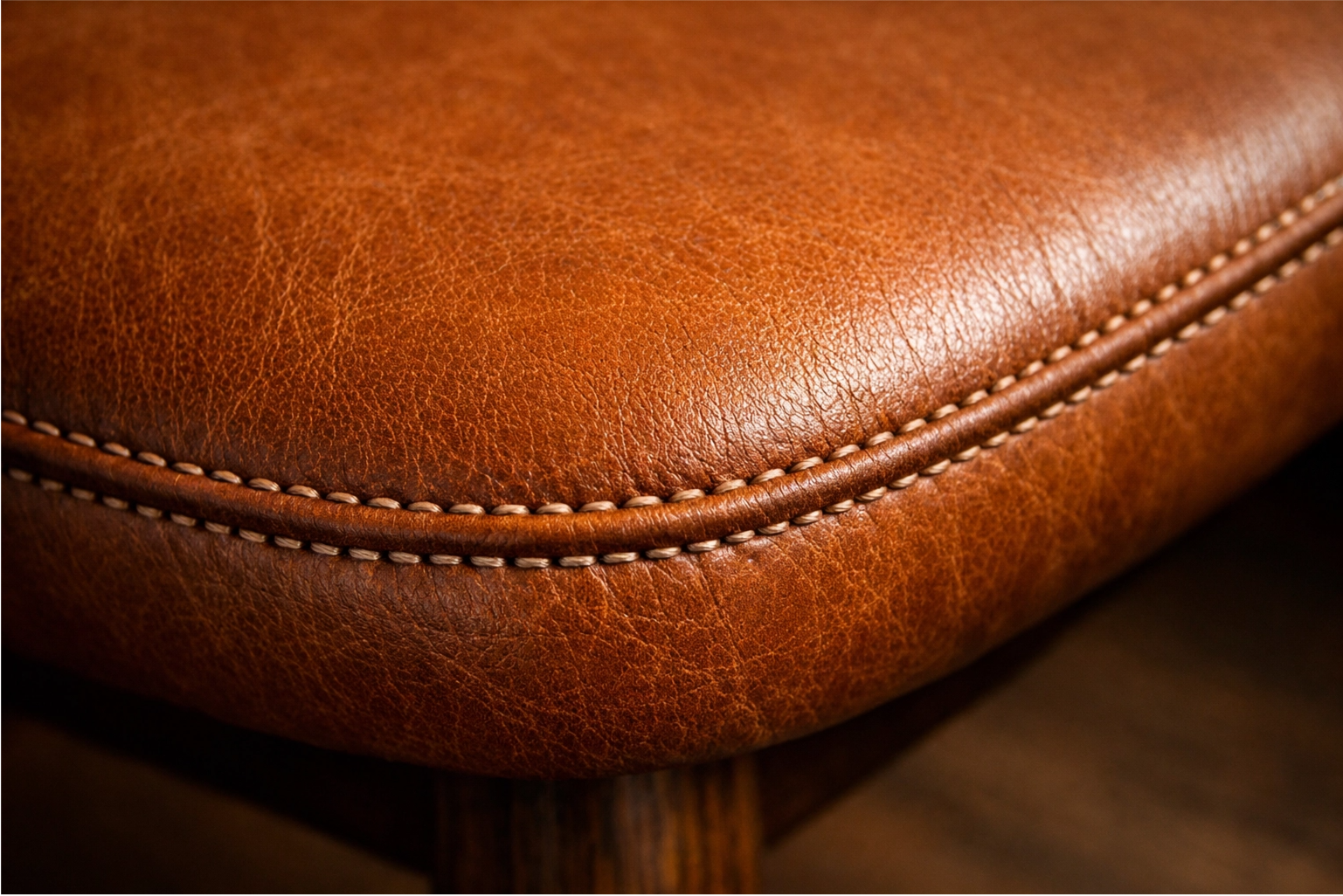
The key is choosing the right type of leather. Not all leather is created equal. For a high-traffic area like a dining room, you want what’s called "protected" or "semi-aniline" leather. This is top-grain real leather that has a thin, invisible protective coating applied to its surface. This coating is a game-changer. It prevents liquids from soaking in immediately, giving you time to wipe up spills before they become stains. It’s the exact type of material we specify for Mark’s restaurant projects because it offers the perfect balance. You get the soft, supple feel of real leather but with the durability and easy maintenance needed for a commercial environment. It’s far more forgiving than absorbent fabrics and more comfortable than a simple wooden seat.
Material Comparison for Dining Chairs
| Feature | Real Leather (Protected) | Upholstered Fabric | Solid Wood |
|---|---|---|---|
| Durability | Very High | Medium | High |
| Spill Resistance | High | Low | High |
| Ease of Cleaning | Very Easy | Difficult | Easy |
| Comfort | High | Very High | Medium |
| Aging | Develops a rich patina | Can fade and wear out | Can scratch and dent |
Real Leather vs. Faux Leather: Which Is Actually Better for Dining Chairs?
You’re shopping online and the price difference is huge. A faux leather chair looks almost identical to a real leather one for a fraction of the cost. You’re tempted by the savings but worry it’s too good to be true.
For dining chairs, real leather is the superior long-term investment due to its incredible durability. Faux leather is a good budget option but is much less durable, prone to cracking and peeling, and will need to be replaced far sooner.
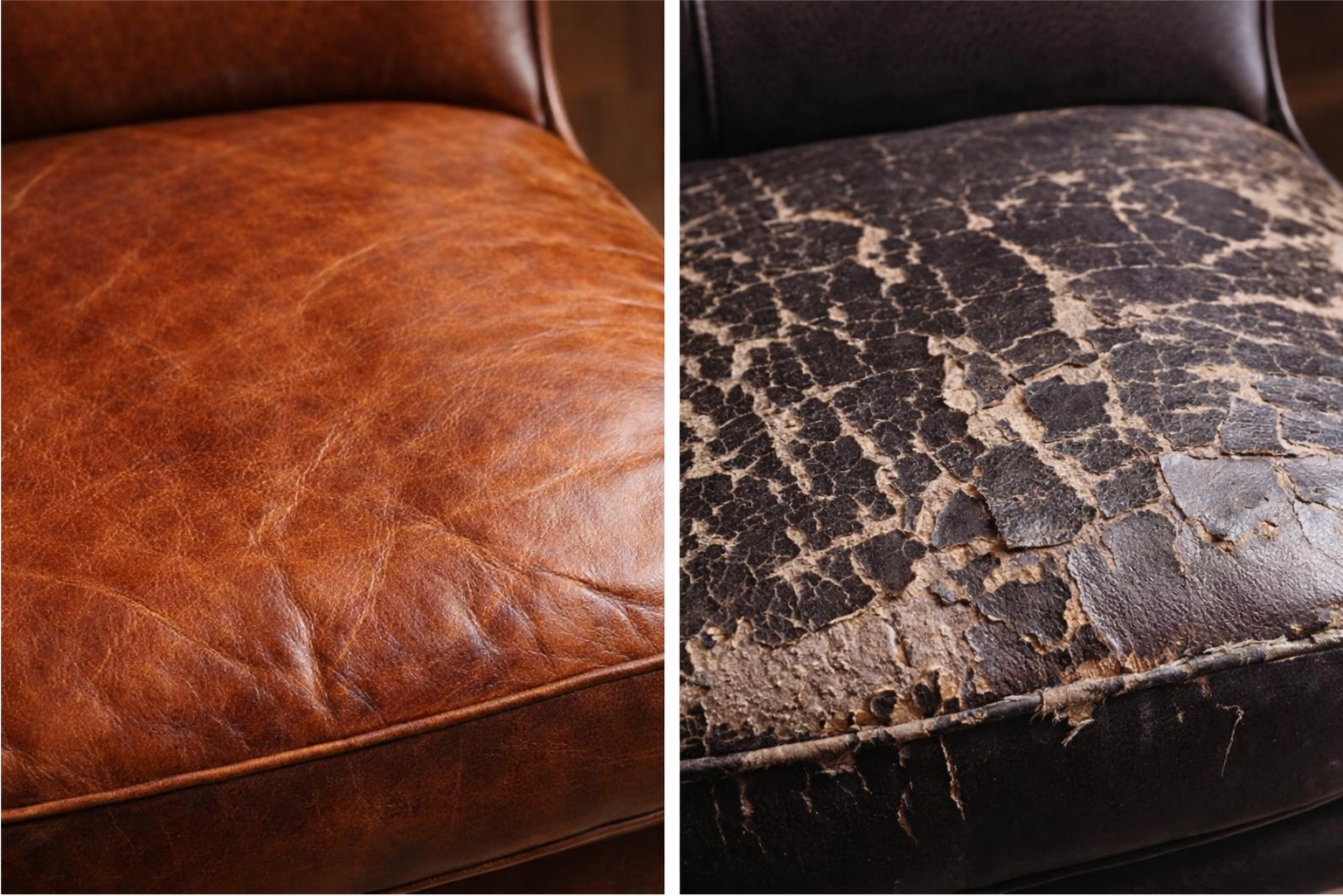
The choice between real and faux leather comes down to a simple trade-off: upfront cost versus long-term value. Faux leather, also known as PU leather or vinyl, is essentially a plastic coating over a fabric backing. It looks great out of the box and is easy to wipe clean, but that plastic coating is its weakness. With the constant flexing and rubbing of daily use, it will inevitably start to crack and peel away from the fabric. I always tell my clients that if they choose faux leather, they should see it as a short-term solution. For Mark’s projects, where chairs are used constantly, faux leather isn’t even an option. Real leather, on the other hand, is a natural hide. It’s tough, flexible, and breathable. Instead of cracking, it softens and develops a beautiful patina, meaning it actually looks better as it ages.
| Feature | Real Leather | Faux Leather (PU/Vinyl) |
|---|---|---|
| Durability | Lasts 15+ years | Lasts 2-5 years |
| Cost | High | Low |
| Feel & Comfort | Soft, breathable, supple | Can feel sticky, doesn’t breathe |
| Aging | Develops a beautiful patina | Cracks, peels, and delaminates |
| Maintenance | Requires occasional conditioning | Wipe clean only |
How Long Can You Realistically Expect Faux Leather Chairs to Last?
You’ve found a set of faux leather chairs that fits your budget perfectly. Before you click "buy," you want to know what you’re really getting into. Will they last one year? Five years?
Most faux leather chairs have a realistic lifespan of 2 to 5 years. The longevity depends on the quality of the material (PU leather lasts longer than cheaper PVC) and how much they are used.
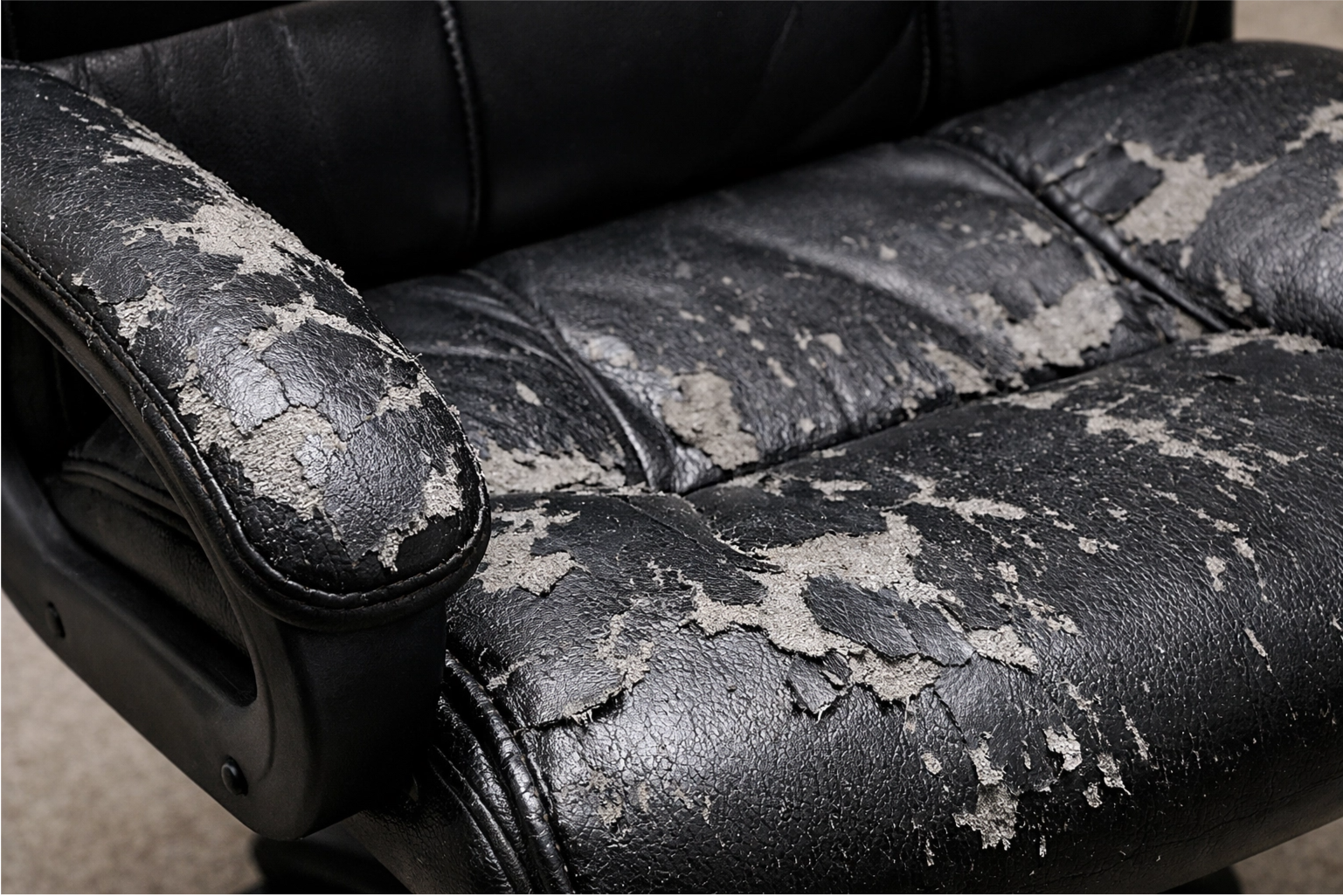
The lifespan of faux leather is directly tied to its chemical makeup. It is a synthetic material, and over time, the plasticizers that keep it soft and flexible begin to break down. This process is accelerated by three main factors. First is use. Every time you sit and shift your weight, the material flexes, slowly creating micro-cracks that eventually grow into peels. Second is sunlight. The UV rays from the sun will degrade the plastic coating, making it brittle. A chair sitting in a sunny breakfast nook will break down much faster than one in a formal dining room. Third is cleaning. Using harsh chemical cleaners will strip the protective topcoat and speed up the degradation process. While it’s a great material for a low-use accent chair, it’s simply not designed to withstand the heavy, daily wear-and-tear that real leather can handle.
How Do You Properly Maintain Leather Dining Chairs?
You’ve invested in a beautiful set of leather chairs, and now you want to protect them. You’re nervous about cleaning them, afraid that using the wrong product will cause more harm than good.
Proper maintenance is simple and requires just a few easy steps. Regularly dust the chairs, wipe up spills immediately with a damp cloth, and apply a quality leather conditioner every 6 to 12 months to keep the hide nourished.
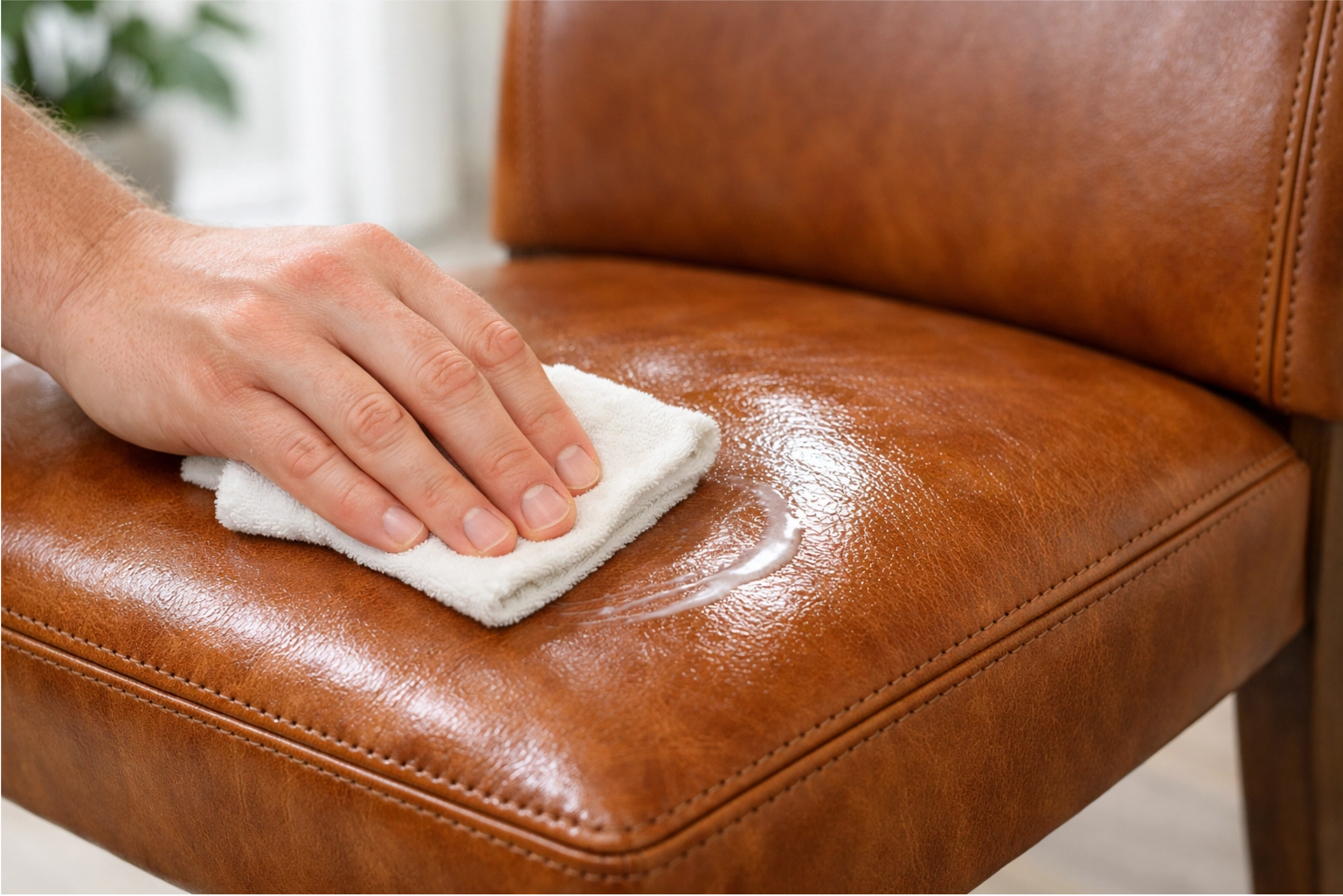
Think of leather like your own skin—it needs to be cleaned gently and moisturized occasionally to stay in good shape. Forget complicated cleaning kits; a simple routine is all you need.
A Simple Maintenance Routine:
- Weekly Dusting: Use a soft, dry microfiber cloth to wipe down the chairs. This prevents dust and grit from settling into the grain and acting like sandpaper over time.
- Immediate Spill Management: If a spill happens, don’t panic. Blot it up immediately with a slightly damp cloth. Avoid rubbing, which can push the liquid deeper. For protected leathers, this is usually all you need. Never use harsh soaps or all-purpose cleaners.
- Semi-Annual Conditioning: Every 6 to 12 months, apply a specialized leather conditioner. This is the most important step. The conditioner replenishes the natural oils in the hide, keeping it soft, supple, and preventing it from drying out and cracking. Apply a small amount to a cloth and gently rub it in using a circular motion.
How Can You Remove or Improve Wrinkles in Leather Seat Cushions?
Your leather cushions are starting to look a little saggy and wrinkled. It’s making your chairs look old and worn, and you’re hoping there’s a way to tighten them up and restore their smooth appearance.
You can significantly improve wrinkles by using a hairdryer or heat gun on a low setting. The gentle heat helps to shrink the leather hide, tightening it over the cushion and reducing the appearance of wrinkles and sagging.
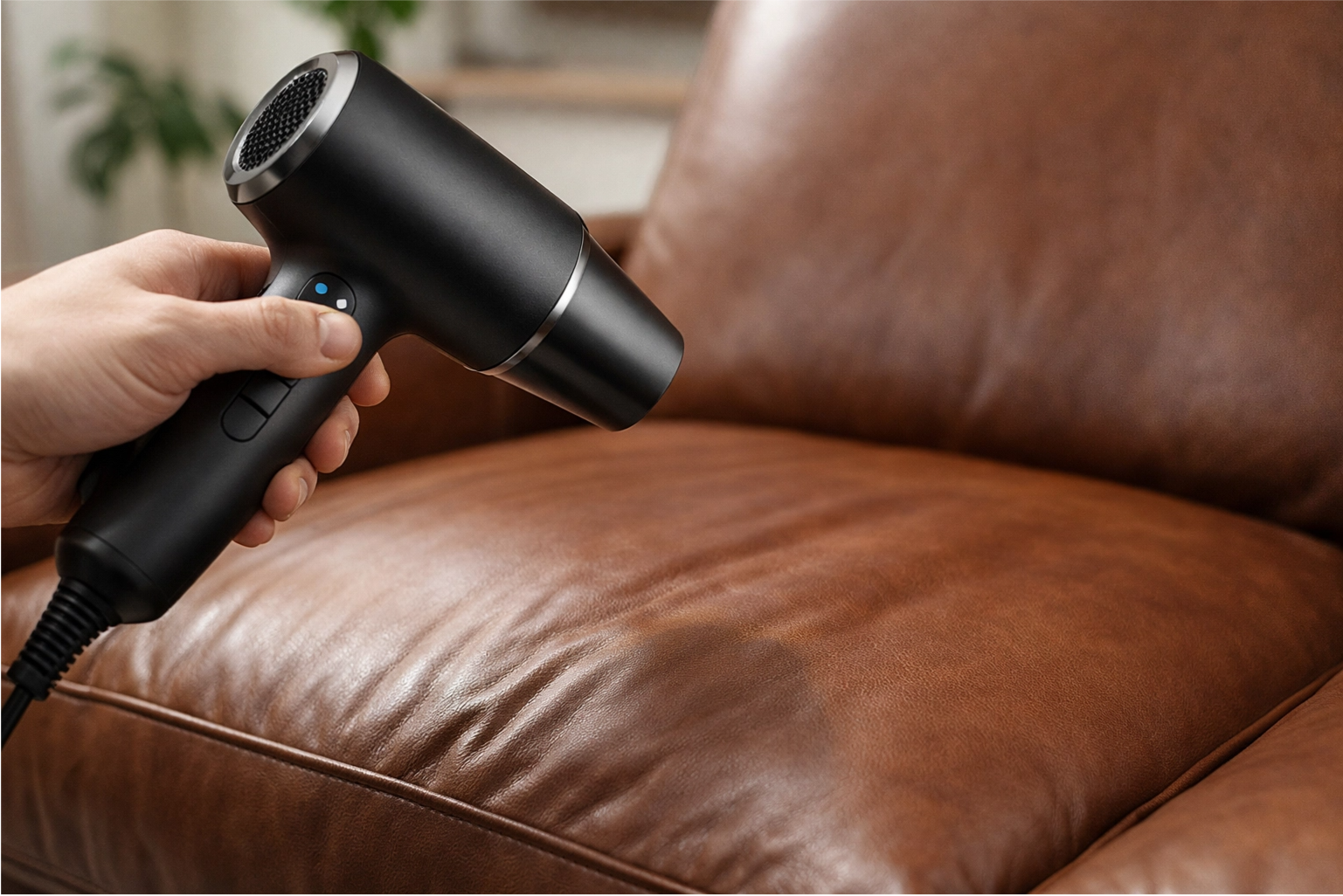
This might sound strange, but it works because leather is a natural skin. Just as hot water shrinks a wool sweater, heat causes the fibers in a leather hide to contract and tighten.
Step-by-Step Guide to Removing Wrinkles:
- Clean the Area: First, wipe the leather with a clean, damp cloth to remove any dust or dirt.
- Apply Gentle Heat: Set a hairdryer to a medium or low heat setting. Hold it about 6-10 inches away from the wrinkled surface. Never hold it in one spot for too long to avoid burning or damaging the leather.
- Keep it Moving: Move the hairdryer continuously in a sweeping motion over the wrinkled area. As you apply heat, you should start to see the leather tighten up.
- Smooth by Hand: While the leather is still warm, use your hands to gently smooth out the wrinkles.
- Condition Afterwards: After the leather has cooled, it’s a good idea to apply a bit of leather conditioner to replenish moisture lost during the heating process. This method works best on real, high-quality leather.
Conclusion
A Mid-Century Modern leather dining chair is a fantastic investment in both style and function. By choosing durable, real leather and committing to a simple maintenance routine, you ensure a timeless look that will last for decades.