Your beautiful outdoor furniture is now covered in a layer of dust, pollen, and faint stains. You know it needs a good cleaning, but you’re afraid of using the wrong product and causing permanent damage.
The best approach is to use the gentlest methods first. A simple solution of mild dish soap and water will handle most dirt, while regular protection with breathable covers is the most effective way to prevent future damage and wear.
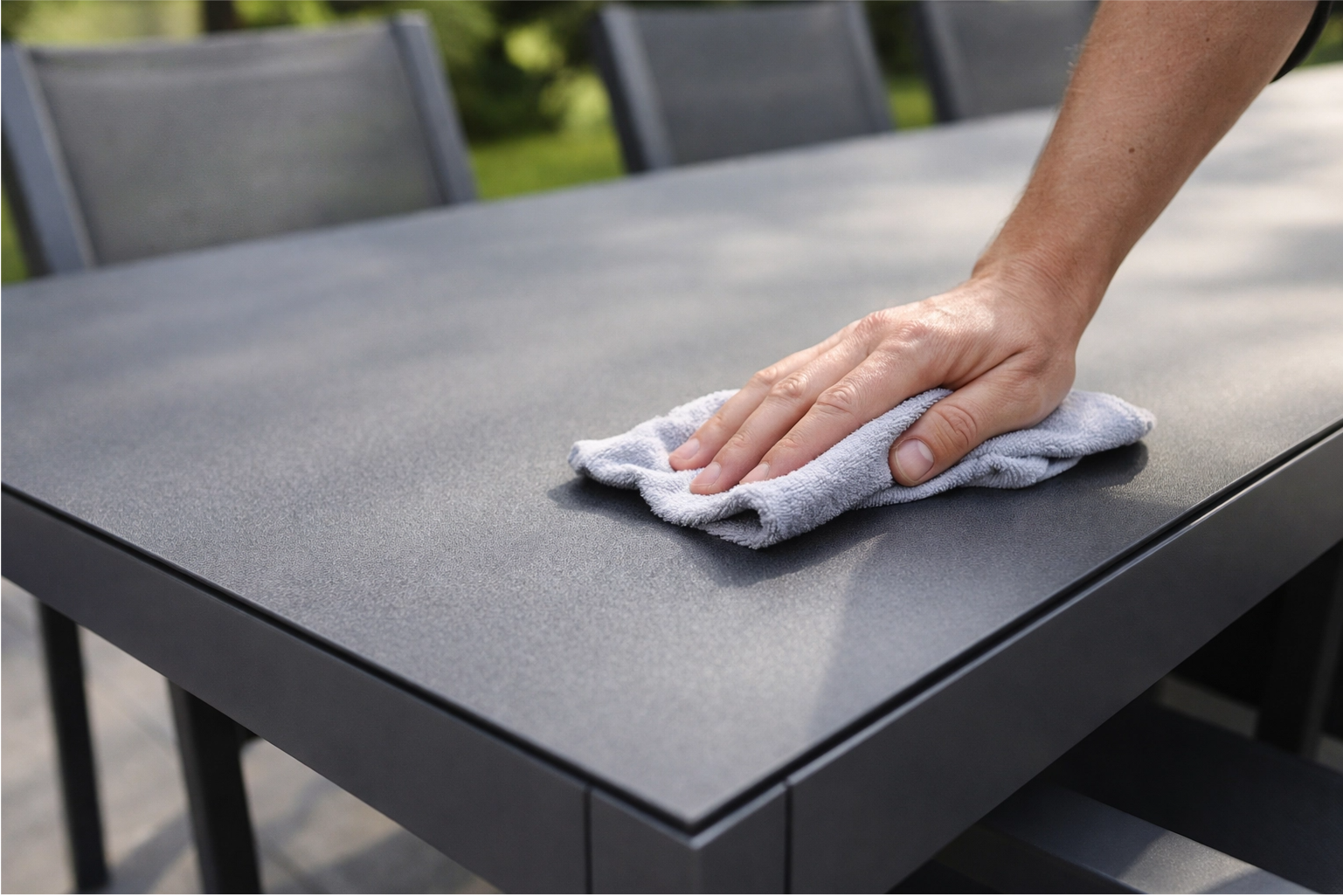
In my business, we supply furniture to high-traffic hotels and restaurants. For them, appearance is everything. They can’t have dirty or weathered furniture greeting their guests. I’ve learned from clients like Mark Chen in Canada that the best maintenance routines are the simplest. It’s not about using harsh chemicals; it’s about consistent, gentle care and smart protection. This approach protects their investment and keeps their spaces looking professional.
What Are the Best (and Safest) Cleaning Products for My Outdoor Furniture?
Your patio furniture is dirty, and you want it clean now. You see dozens of specialized, expensive cleaners at the store, but you’re not sure which ones are safe for your set’s finish.
Start with the basics you already own. A few drops of mild dish soap in a bucket of warm water is the safest and most effective cleaner for 90% of situations. It removes grime without damaging the finish.
I always advise my clients to avoid aggressive, chemical-heavy cleaners unless absolutely necessary. The goal is to remove the dirt, not the protective finish of your furniture. Over the years, I’ve found a simple, tiered approach works best for tackling any cleaning job safely. Always test any cleaning solution on a small, hidden area first.
Your Go-To Cleaning Toolkit
Most issues can be solved with just a few household items. The key is to start with the mildest solution and only escalate if the stain persists.
| Cleaning Task | The Best Product | How to Use It |
|---|---|---|
| Routine Cleaning | Mild dish soap and warm water. | This is your first line of defense. The soap gently breaks down everyday grime, pollen, and light stains. Use a soft cloth or sponge, and always rinse thoroughly with clean water afterward to prevent soap residue buildup. |
| Stubborn Stains & Water Spots | A solution of 1 part white vinegar to 3 parts water. | Vinegar is a mild, natural acid, making it excellent for dissolving mineral deposits from hard water and tackling more persistent grime that soap leaves behind. Spray it on, let it sit for a few minutes, then wipe clean and rinse. |
| Mold & Mildew | A stronger solution of 1 part white vinegar to 1 part water. | Vinegar has natural properties that kill mold and mildew spores. This solution is much safer for most surfaces than chlorine bleach, which can cause discoloration and damage to fabrics and finishes. |
How Can I Safely Clean Both Wood and Metal Finishes?
You have a mix of furniture materials, like a teak table and aluminum chairs. You’re worried that the cleaning method for one will damage the other, and you don’t want to buy multiple expensive products.
The cleaning process is nearly identical and built on gentle methods. Use a soft-bristled brush with a mild soap and water solution for both, but focus on rinsing metal thoroughly and carefully sealing wood after it dries.
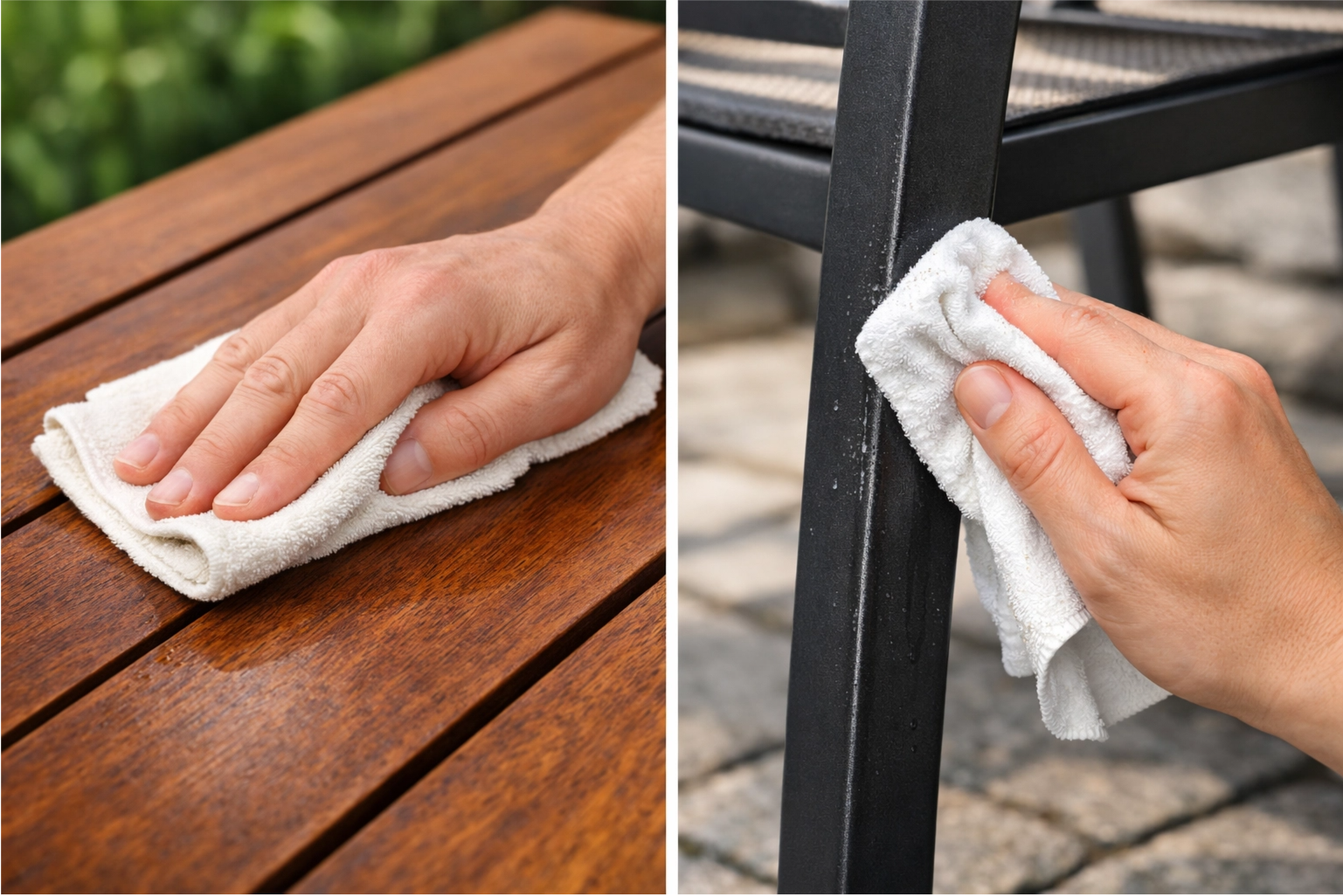
It’s a common misconception that different materials require completely different, complex cleaning routines. While their long-term protection needs vary, the actual process of removing dirt is universal. The golden rule is to be gentle. Harsh scrubbing or aggressive pressure washing can damage a powder-coated metal finish just as easily as it can splinter a wood surface.
Cleaning Metal Furniture (Aluminum, Steel)
For metal, the primary enemy is abrasive grit. Dust and dirt can act like fine sandpaper, scratching the protective powder coat over time.
- Step 1: Rinse. Start by gently hosing down the furniture to remove loose debris. This prevents you from grinding dirt into the finish.
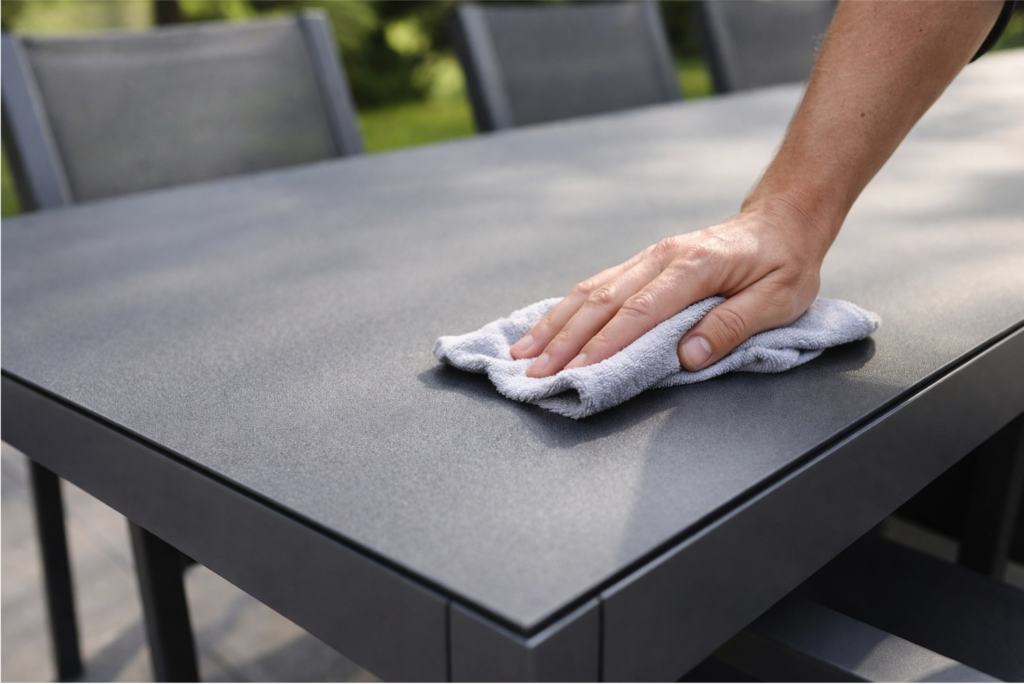
- Step 2: Wash. Use a soft cloth or sponge with a mild soap and water solution. A soft-bristled brush can be used for textured surfaces.
- Step 3: Rinse Again. This is the most important step for metal. Rinse thoroughly with clean water to remove all soap residue, which can leave a dull film.
- Step 4: Dry. Wipe down with a soft, dry cloth to prevent water spots, especially if you have hard water.
Cleaning Wood Furniture (Teak, Acacia)
For wood, the goal is to clean the surface without stripping its natural oils or raising the grain excessively.
- Step 1: Wet the Wood. Lightly spray the surface with water.
- Step 2: Scrub. Use a soft-bristled brush and a mild soap solution, scrubbing gently in the direction of the wood grain. This lifts dirt from the surface without causing splintering.
- Step 3: Rinse. Rinse thoroughly with clean water.
- Step 4: Dry Completely. Let the wood air dry completely, which can take up to 24 hours. The next step, protection, can only be done on perfectly dry wood.
How Can I Properly Weather-Protect My Outdoor Furniture?
You’ve spent time and money cleaning your furniture, and it looks great. Now you want to keep it that way and protect it from the inevitable sun, rain, and temperature changes.
The single most effective strategy is using high-quality, breathable covers whenever the furniture is not in use. For wood, applying a specialized UV-blocking sealer once a year provides essential protection.
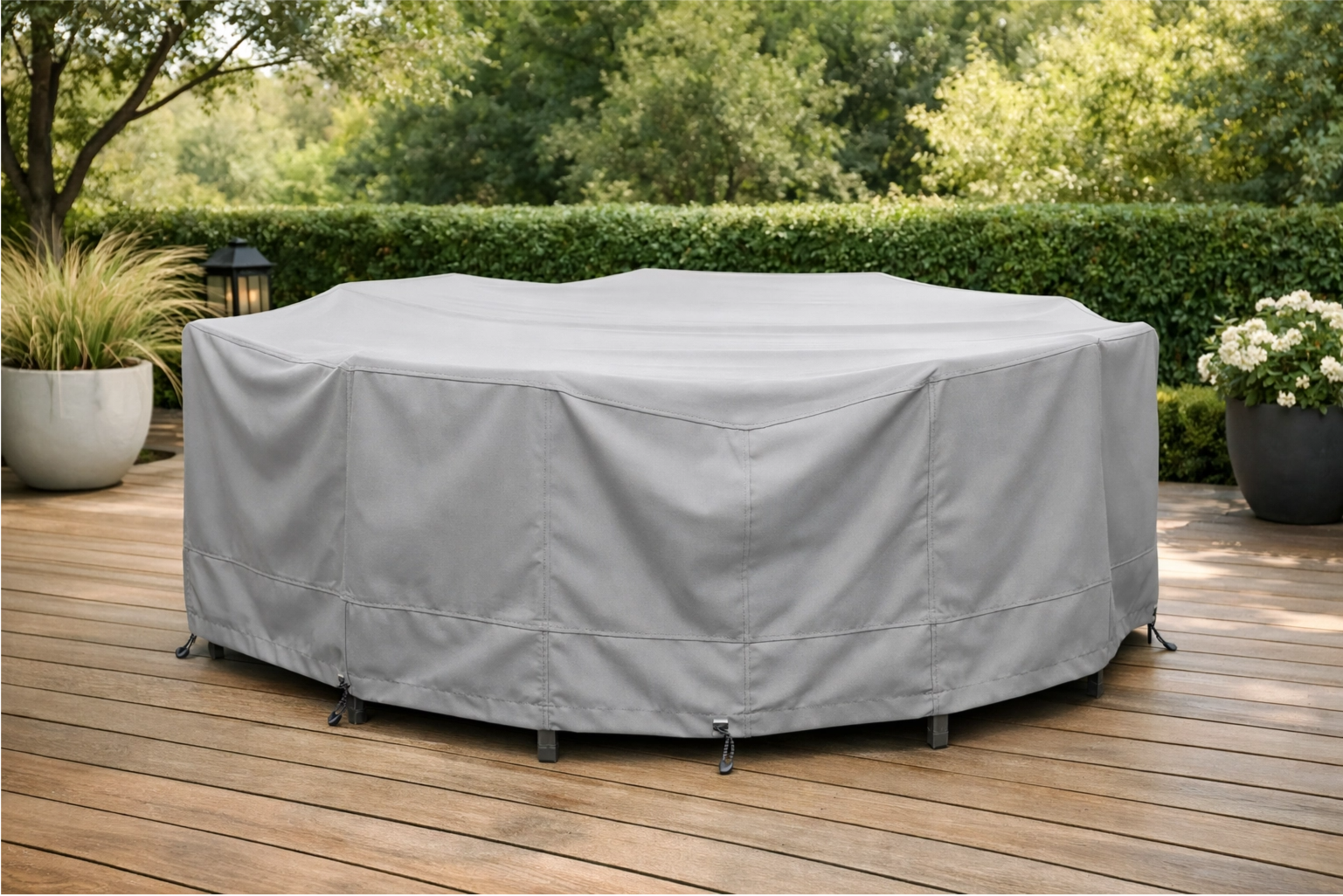
Protection is all about creating a barrier between your furniture and the elements. There is no such thing as truly "weatherproof" furniture, only "weather-resistant." A smart protective strategy can dramatically extend the life and appearance of any outdoor set. It’s a simple, two-part defense system.
Defense #1: The Physical Shield (Covers)
This is your most important tool. A good cover defends against everything at once.
- UV Radiation: The sun is the biggest enemy. UV rays break down finishes, fade fabrics, and dry out wood. A cover is like permanent shade.
- Moisture: Covers keep rain off, preventing water damage and discouraging mold and mildew growth.
- Dirt and Debris: They keep your furniture clean and ready to use.
The most critical feature is breathability. Never use a plastic tarp. Tarps trap moisture underneath and create a humid environment, which is the perfect breeding ground for mold. Invest in a proper furniture cover made from a waterproof yet breathable fabric.
Defense #2: The Surface Barrier (Sealers and Waxes)
This is an extra layer of defense applied directly to the furniture.
- For Wood: After cleaning and drying, apply a quality outdoor wood sealer with UV inhibitors. This repels water and protects the wood from sun damage. This should be done annually.
- For Metal: A clean, powder-coated finish is already highly protective. To add extra shine and water repellency, you can apply a coat of automotive wax once a season. It makes water bead up and roll right off.
Conclusion
To keep your furniture looking new, rely on simple, consistent care. Clean regularly with mild soap and water, and always use breathable covers to protect your investment from the elements.